Gwalior Fort saw a thousand years of sieges. The last one, in June 1858, ended with a queen cut down by cavalry—and ended an empire's worst nightmare.
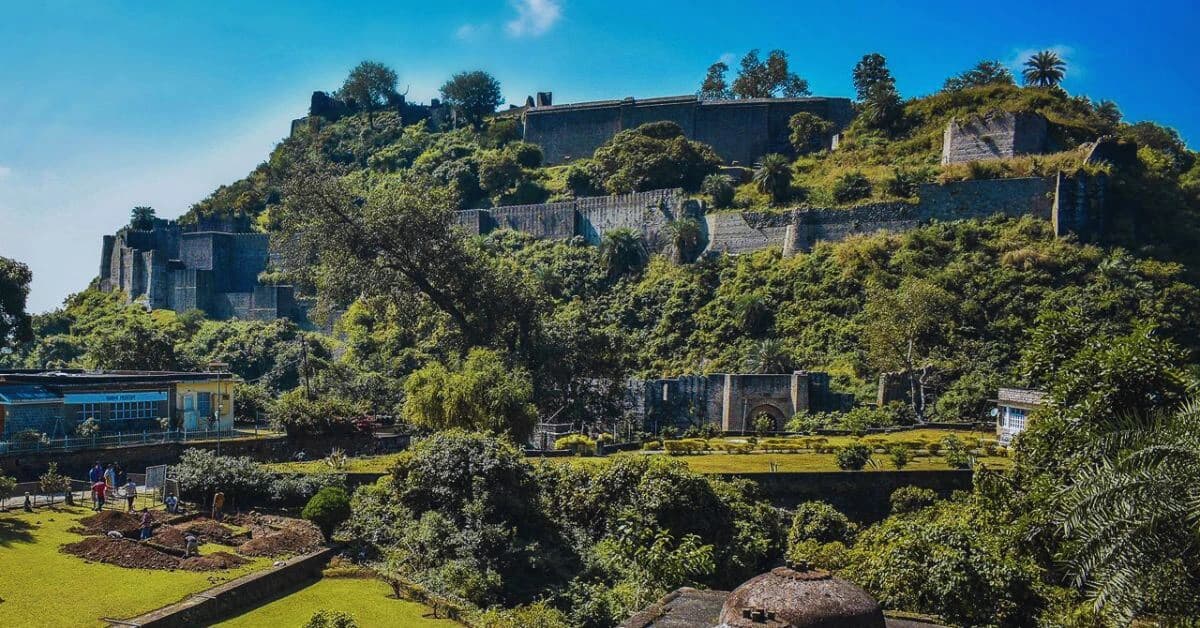
Babur, the first Mughal emperor, looked up at Gwalior Fort in 1527 and called it "the pearl in the necklace of forts of Hind." He wasn't being generous. He'd just captured the thing after considerable difficulty, and he was impressed despite himself. The fort sits on a sandstone cliff rising a hundred meters above the surrounding plain, its walls running three kilometers along the ridge. From below, it looks less like a building and more like the cliff itself decided to grow battlements.
Nobody is sure exactly when it was built. A 6th-century inscription mentions a sun temple here. By the 8th century, the fort was definitely a going concern. Local legend credits a king named Suraj Sen, who was cured of leprosy by a sage named Gwalipa and built a fort in gratitude. Whether or not that happened, the name stuck: Gwalior.
What we can say with certainty is that the fort changed hands more often than seemed healthy for its residents. The Kachchhapaghatas held it. The Ghurids took it. The Sultanate grabbed it. The Tomars won it back. Babur claimed it. And then a succession of Mughals, Marathas, Jats, and British traded it back and forth like a very large, very strategic game of pass-the-parcel.

Most of what visitors see today dates to one man: Raja Man Singh Tomar, who ruled from 1486 to 1516. He was a patron of music—credited with developing Dhrupad, the classical singing style—and apparently he had strong opinions about architecture.
His Man Mandir Palace clings to the northeastern cliff edge, its façade covered in blue, yellow, and green ceramic tiles arranged in patterns of elephants, ducks, and peacocks. Alexander Cunningham, the British archaeologist, called it "the noblest specimen of Hindu domestic architecture in Northern India." The palace has four stories, two of them underground, connected by narrow staircases that can leave modern visitors disoriented. There's a network of speaking tubes built into the walls—an early intercom system that let people on different floors communicate without shouting. The guides call it "the whispering gallery."
The Mughals later turned those underground floors into a prison. Jahangir held the sixth Sikh Guru, Hargobind, here for several years. Aurangzeb had his own brother Murad poisoned to death in one of the lower chambers. The same walls that once echoed with Dhrupad became very quiet indeed.
Man Singh also built the Gujari Mahal for his queen Mrignayani—she was a Gujar princess, the name means "doe-eyed"—after she demanded her own palace with its own water supply. The aqueduct he built to satisfy her still runs to the site, though the palace is now the Archaeological Survey's museum.

Carved into the cliffs along the approach to the fort are some of the largest Jain sculptures in India. The biggest stands 58 feet tall: Rishabhanatha, the first Tirthankara. There are around 1,500 figures in total, carved between the 7th and 15th centuries, arranged in groups along the rock face.
Many of their faces are damaged. This is sometimes attributed to British cannon fire during the 1858 siege, which makes for a dramatic story but isn't true. Babur did it. In his memoirs, written in 1527, he complained about the "idols" he found:
They have hewn the solid rock and sculpted out of it idols of larger and smaller size... These figures are perfectly naked, without even a rag to cover the parts of generation. I directed these idols to be destroyed.
Fortunately, his soldiers didn't finish the job. They defaced many of the statues—knocked off noses, chipped away at torsos—but didn't destroy them entirely. Some were later repaired with stucco. Standing at the base of the cliff today, looking up at the serene figures weathering their damage, it's hard not to feel they got the last word.

Rani Lakshmibai of Jhansi has become so associated with Gwalior Fort that people sometimes assume she ruled it. She didn't. She was queen of Jhansi, 200 kilometers to the west, and came to Gwalior only at the very end of her story.
The outline is famous: Born around 1828 as Manikarnika Tambe, raised at the Peshwa's court where she learned horsemanship and sword fighting, married to the Raja of Jhansi, widowed at 25 when the British refused to recognize her adopted son's succession. Under the Doctrine of Lapse, they annexed Jhansi. She was given a pension and told to leave.
When the rebellion of 1857 erupted, she initially stayed neutral—she even raised a protective force with British permission. But by March 1858, British forces under Hugh Rose arrived to siege Jhansi. The fighting was intense. She held out for two weeks before escaping on horseback as the city fell.
She fled to Kalpi, where the rebels regrouped under Tatya Tope and Rao Sahib. When the British took Kalpi too, the rebel leaders made a desperate gamble: they marched on Gwalior.

The Scindia Maharaja of Gwalior had remained loyal to the British throughout the rebellion. When the rebel army appeared at Morar on June 1, 1858, his forces deserted en masse. The Maharaja fled to Agra. Lakshmibai and Tatya Tope took Gwalior Fort without a fight.
It was, briefly, a triumph. They had captured one of the most formidable fortresses in India. But the British were already coming.
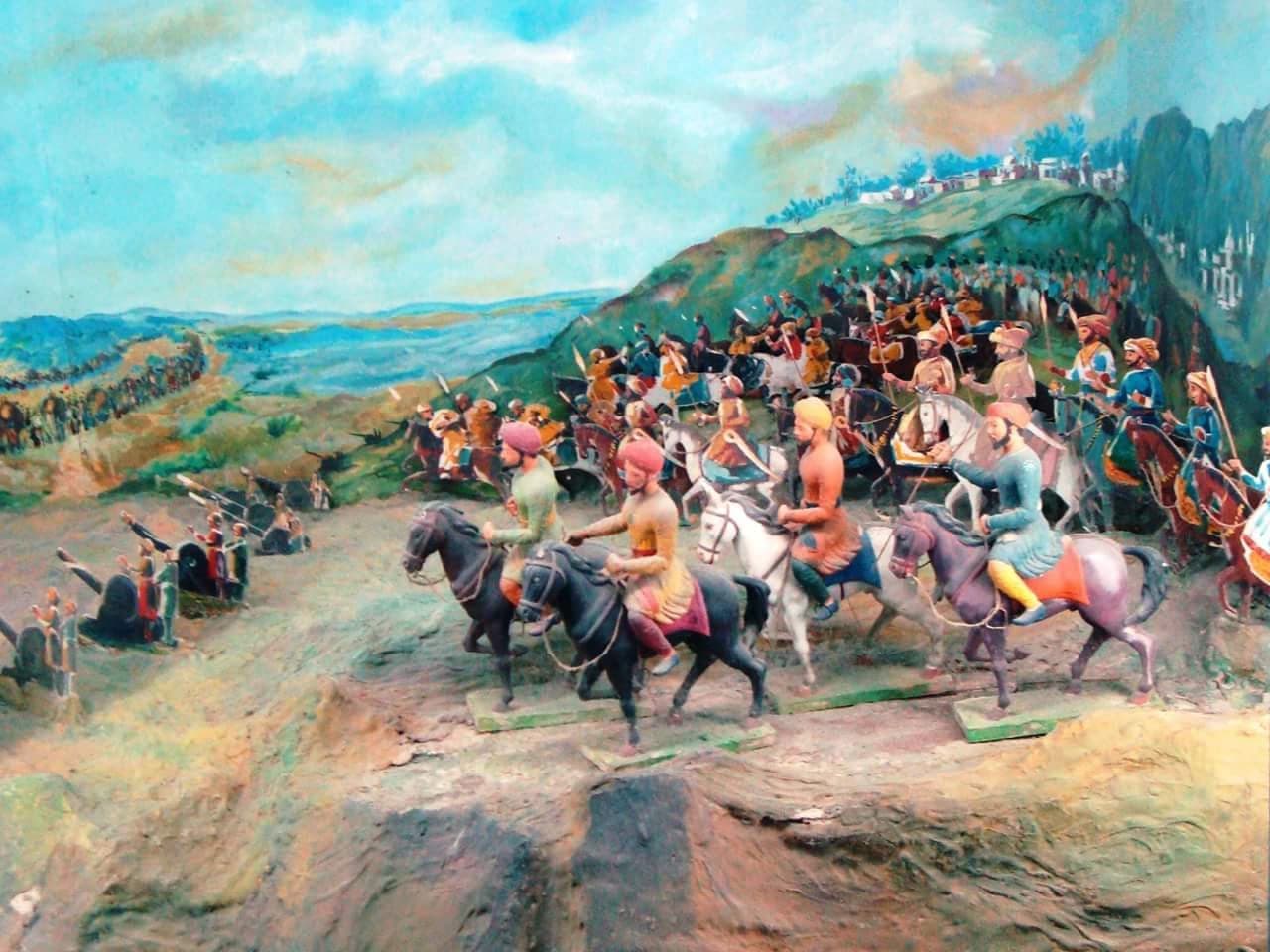
Rose force-marched his troops through the June heat. By June 17, a squadron of the 8th King's Royal Irish Hussars under Captain Heneage encountered Indian forces at Kotah-ki-Serai, near the Phool Bagh gardens east of the fort. What followed was a cavalry action of the old brutal kind—sabers and carbines at close range.
Lakshmibai was there, dressed as a cavalry trooper. The contemporary sources agree on this much. What happened next is less clear. British accounts say she was "cut down" by a Hussar. Indian accounts give varying details—shot, then slashed—but agree she died in the fighting. Her body was cremated the same day by locals, either to honor her wishes or simply because there was no time for anything else.
She was somewhere between 23 and 30 years old, depending on which birth date you accept.

Three days later, Rose's forces took Gwalior Fort. The rebellion, which had threatened British rule across northern India for more than a year, was effectively over. On August 2, Parliament abolished the East India Company. Queen Victoria assumed direct rule of India.
In his report, Hugh Rose called Lakshmibai "remarkable for her bravery, cleverness and perseverance" and "the most dangerous of all the rebel leaders." Colonel Malleson, writing later, put it more simply: "She lived and died for her country."
Her memorial—a samadhi, not a cenotaph—stands in the Phool Bagh area where she fell. It's a modest structure for someone who became such a towering symbol.
The fort itself remains one of the great historical sites of India, though it's on the UNESCO tentative list rather than the World Heritage list proper. The Scindia dynasty, which got the fort back from the British in 1886, founded a school there in 1897—the Scindia School still operates inside the fort walls.

The Teli Ka Mandir, the oldest structure in the complex, still stands its 25-meter barrel vault looking oddly out of place among the later Rajput buildings. It was built in the 8th or 9th century by the Pratihara dynasty, and the name—"Oil-Merchant's Temple"—might come from the oil traders who funded it, or from the Telang Brahmins who once ran it. During the British period, it was reportedly used as a soda factory and coffee shop. It's now back to being a temple.
Every evening, there's a sound and light show against the Man Mandir Palace walls, narrated in Hindi and English. The voice belongs to Amitabh Bachchan, which is as close to a royal imprimatur as modern India gets.
But the real experience is simpler: stand on the ramparts in the morning light, look out over the city that's grown up around the fort, and consider how many people have stood in the same spot and looked at the same view over the last fifteen centuries. Babur stood here. Akbar imprisoned his rivals here. Man Singh composed music here. Lakshmibai, in her last days, must have looked out and known the British would come.
They all thought they'd hold it forever. None of them did. The fort just keeps standing there, waiting for the next ruler to discover that Gwalior outlasts everyone.

Visiting: Gwalior Fort is open daily from 8 AM to 6 PM. Entry is ₹75 for Indians, ₹350 for foreign nationals. The light and sound show runs at 7:30 PM (Hindi) and 8:30 PM (English) most evenings—check locally for current schedules. The Archaeological Museum in Gujari Mahal is closed on Mondays.
Getting there: Gwalior Junction is on the main Delhi-Mumbai rail line. The airport has flights from Delhi. The fort is walkable from the city, but the climb is steep; most visitors take an auto-rickshaw to Hathi Pol (Elephant Gate) and walk from there.