There's a saying in the hills of Himachal Pradesh: "He who holds the Kangra fort holds the hills."
For most of the last millennium, people kept trying to prove that saying right. Mahmud of Ghazni came in 1009. The Tughlaqs came in the 14th century. Sher Shah Suri's generals came in the 16th. The Mughals came repeatedly under Akbar, failed repeatedly, and finally succeeded under Jahangir in 1620 after starving out the garrison for fourteen months. The Sikhs took it. The Gorkhas besieged it. The British finally acquired it after the First Anglo-Sikh War in 1846.
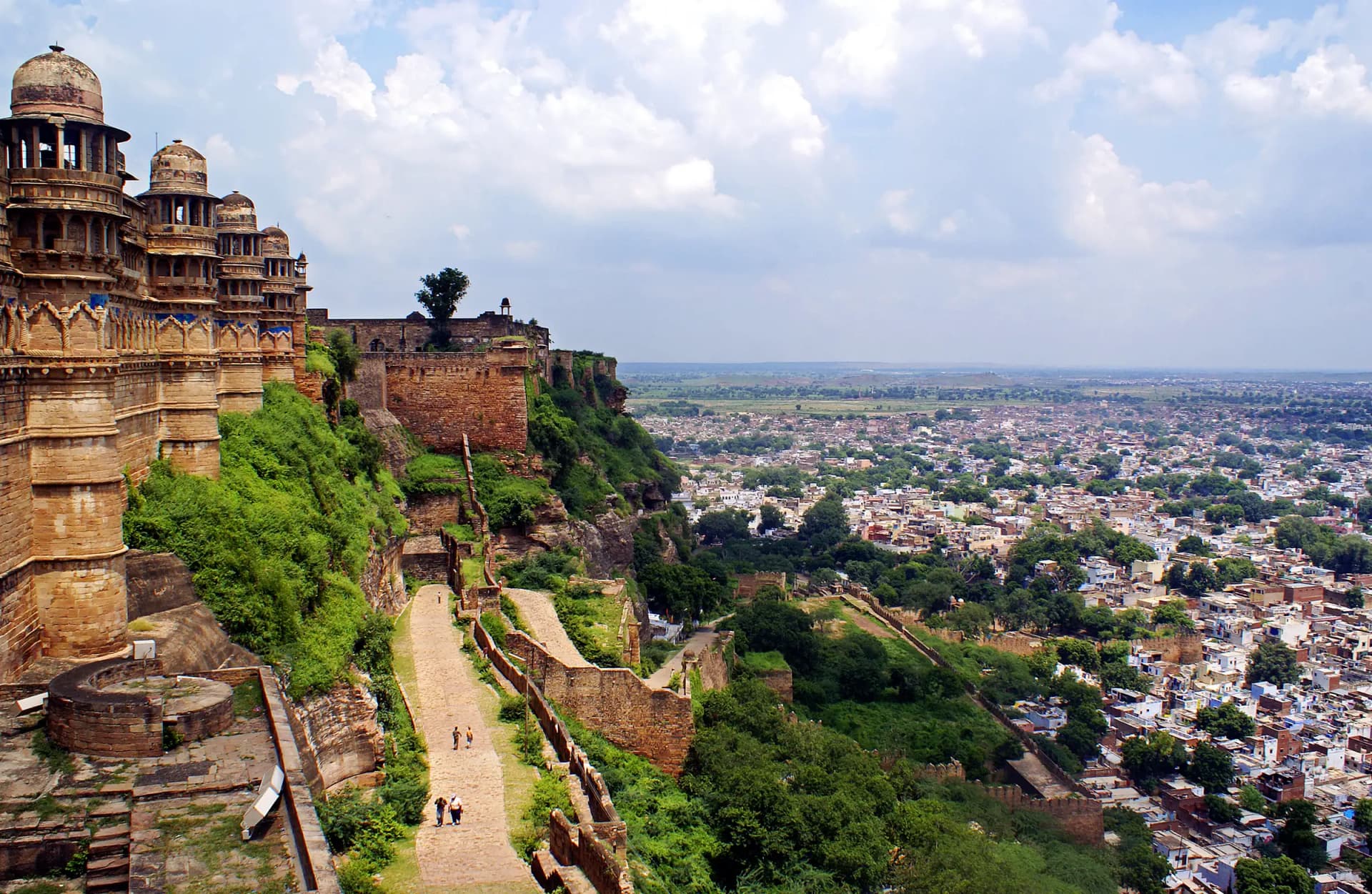
The family that built this fort, the Katochs, claim to be the world's oldest surviving dynasty. Whether that's true depends on how you count and what you count as survival. But they're still around. The fort, perched between two rivers on a ridge in the Dhauladhar foothills, still stands—though the 1905 Kangra earthquake left it in ruins.

Kangra sits where the Manjhi and Banganga rivers meet, about 20 kilometers from Dharamshala. The ridge between the rivers made a natural fortress. The Katochs, a Rajput clan, built their stronghold here sometime in antiquity. When exactly is disputed. The dynasty claims origins in the Mahabharata, which is how these things work. The earliest archaeological evidence inside the fort dates to around the 9th-10th century CE. The earliest written record of the fort comes from its first major catastrophe: Mahmud of Ghazni's raid in 1009.
The Katoch kingdom was called Trigarta, meaning "land of the three rivers" (the Ravi, Beas, and Sutlej). Kangra was their capital, and the fort was their treasury. According to Al-Utbi, who chronicled Mahmud's campaigns, the wealth stored there was beyond calculation—"so huge that the backs of camels could not carry it, nor vessels contain it, nor writer's hands record it."
Mahmud's forces looted eight of the twenty-one treasure wells inside the fort. But they didn't stay. The Katochs rebuilt.

For the next six centuries, the pattern repeated. Invaders came, sometimes took the fort, sometimes failed, but the Katochs outlasted them. Muhammad bin Tughluq tried in 1333 and lost most of his army in the hills. Firuz Shah Tughluq came in 1351 and couldn't break the siege. Sher Shah Suri's general Khawas Khan took it in 1540 through a treaty.
Then came the Mughals.
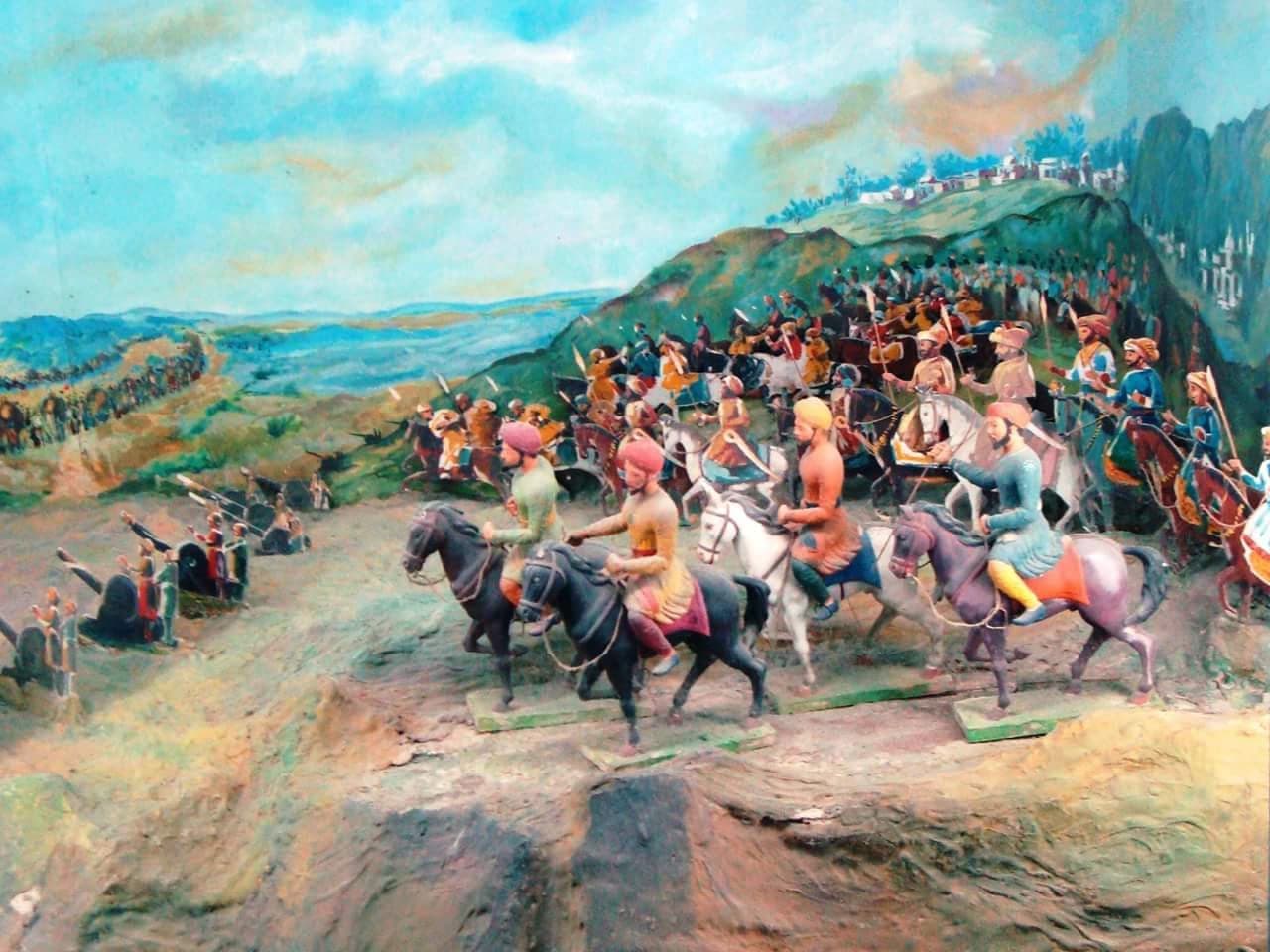
Akbar wanted Kangra. According to some accounts, he tried to take it fifty-two times and failed every time. The number is probably exaggerated, but the failure wasn't. The fort's position made conventional siege warfare nearly impossible. The Katoch king Dharam Chand eventually submitted to Akbar in 1556, agreed to pay tribute, and was allowed to keep his throne. But the fort remained with Mughal appointees.
In 1620, Jahangir sent his son Prince Khurram (the future Shah Jahan) to finish the job. The siege lasted fourteen months. The garrison ate boiled grass. Raja Hari Chand was killed, and the Kangra kingdom was formally annexed into the Mughal Empire. Jahangir visited the fort the following year and, in a gesture of Mughal dominance, ordered a bullock slaughtered inside its walls.

The Katochs never forgot.
When Mughal power weakened in the 18th century, the Katochs came back. Raja Sansar Chand II, who came to power in 1775, spent years maneuvering to reclaim his ancestral fort. By 1786, with Sikh help, he had it. He then spent the next two decades making the Katoch kingdom the most powerful in the Punjab hills.
This was Kangra's golden age. Sansar Chand patronized the arts, particularly the Kangra school of miniature painting, which produced some of the finest work in Indian art history. An estimated 40,000 paintings were created under his patronage—detailed, luminous works depicting Hindu mythology, court life, and the landscapes of the Kangra valley.

But Sansar Chand overreached. His campaigns against neighboring hill states made enemies. In 1806, those enemies called in the Gorkhas, who had already conquered much of the western Himalayas. A force of 40,000 Gorkha soldiers swept into Kangra.
Sansar Chand held the fort, but little else. He turned to Maharaja Ranjit Singh of the Sikh Empire for help. Ranjit Singh drove out the Gorkhas in 1809, but he kept the fort as payment. The Katochs got their kingdom back, minus their most prized possession.
When Ranjit Singh died, the Sikh Empire fragmented. After the First Anglo-Sikh War, the British took control of the Punjab hills in 1846. They garrisoned Kangra Fort until the earthquake of April 4, 1905, destroyed much of the structure.

The fort is still there, sprawling across the ridge in picturesque ruin. The Archaeological Survey of India maintains it as a heritage site. You can walk through the damaged gates, past the Jain temples that date to 854 CE, through the remains of what was once the most fought-over fortress in the Himalayas.
The Katochs are still there too, in a diminished way. After independence, the princely states were absorbed into India. The family retains ceremonial significance and some properties, but no political power.
The Kangra valley, though, has other things worth seeing. The Masrur rock-cut temples, about 40 kilometers from the fort, are 8th-century Hindu shrines carved from a single massive rock, damaged by the same 1905 earthquake but still standing. The Jwalamukhi temple, about 35 kilometers south, houses eternal flames fed by natural gas vents—a geological curiosity that's been a pilgrimage site for centuries.
But the fort is the thing. It watched Alexander's successors pass through the northwest. It was looted by Mahmud and besieged by the Mughals and stormed by the Sikhs. It burned and fell and was rebuilt, and burned and fell again. The 1905 earthquake finished what a thousand years of warfare couldn't.

The Katochs built it. A dozen empires tried to keep it. Nobody held it for long.
Kangra Fort is located about 20 km from Dharamshala, Himachal Pradesh. Gaggal Airport (14 km) has flights from Delhi. The fort is open daily; entry fee applies.